What Happens If Cataracts Are Left Untreated?

Cataracts are easy to ignore at first. The changes are gradual, and it’s tempting to chalk up blurry vision to aging or write it off as something to deal with later. For many people, “later” stretches into months or years. But cataracts keep progressing, and the longer they go without treatment, the more they will affect your vision, your daily routines, and eventually, some of your options.
Keep reading to learn what actually happens when cataracts go untreated, to your sight, then to your daily life, and finally to the medical and surgical choices ahead of you.
How Cataracts Develop and Progress
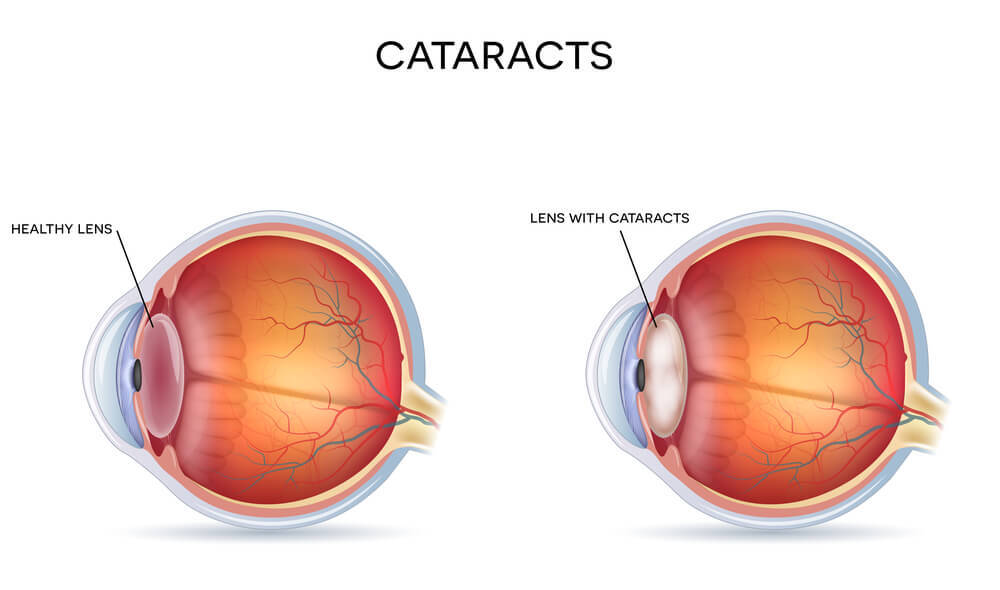
A cataract forms when the natural lens inside your eye becomes cloudy. At birth, that lens is perfectly clear. Over time, proteins within it break down and clump together, creating a haze that blocks and scatters light. It’s a normal part of aging, and nearly everyone will develop cataracts eventually.
In the early stages, the cloudiness is minor. You might notice slightly washed-out colors or a touch more glare from headlights at night. Many people adapt without realizing it by sitting closer to the TV, turning on more lamps, or getting their prescription needs updated. A new pair of glasses can help for a while, but it doesn’t fix the underlying problem. The lens continues to cloud over, and for a while, these adjustments are enough.
Left alone long enough, the lens can become very dense and heavily discolored, and the visual changes that once seemed minor begin reshaping how you live.
What Happens to Your Vision and Daily Life

As cataracts thicken, the workarounds stop working. The impact starts showing up in small ways before it becomes obvious.
Driving at night is often the first thing people struggle with. Headlights and streetlights produce glare and halos that make it hard to read signs or judge distances. Many patients quietly stop driving after dark long before they seek treatment, without connecting it to their cataracts. Reading eventually requires more effort, too, especially for fine print in books, menus, or medicine labels. Looking at these items often requires more light and more concentration than it used to.
Beyond the inconvenience, there’s a real safety concern. Older adults with impaired vision are at significantly higher risk of falls and accidents. That’s not a small thing. Falls are one of the leading causes of serious injury in people over 65, and reduced depth perception and contrast sensitivity, both common with advancing cataracts, play a direct role. For many patients, treating cataracts isn’t just about seeing better. It’s about staying active, staying independent, and staying safe.
What patients often don’t realize is that while their vision is changing, the eye itself is changing too, in ways that matter once surgery is on the table.
Why Waiting Can Make Treatment Harder
Most people know that cataracts affect vision. Fewer realize that delaying treatment also makes the surgery itself more complicated.
As a cataract becomes very dense, it gets harder to remove. During surgery, the cloudy lens is broken up and cleared from the eye using sound wave energy. A denser lens requires more of that energy and more time, which can make the procedure more challenging.
Laser-assisted cataract surgery helps address this as it automates key steps of the process with exceptional precision, but even with advanced technology, a very advanced cataract presents more of a challenge than one treated at an earlier stage.
Sometimes, a swollen, advanced cataract can physically block the normal drainage of fluid, again pushing pressure to a dangerous level. These complications are not typical, but they can happen, and they’re avoidable.
Knowing When It’s Time

So when do you act? There’s no single answer that fits everyone, but there is a reliable benchmark: surgery makes sense when cataracts are getting in the way of how you want to live. That might mean struggling to drive, feeling uncertain on your feet, or finding that activities you enjoy have quietly slipped away.
Cataract surgery is one of the most performed procedures in the country, with a well-established track record of safety and positive outcomes. Recovery is typically straightforward, with most patients noticing a significant improvement in vision within days. Insurance coverage is also available for the core procedure, which removes a significant barrier for many patients.
At Lalin Eye, Dr. Lalin takes time to understand where each patient is in their cataract journey and what they’re hoping to get back. For some, that’s driving confidently after dark. For others, it’s reading without a magnifying glass or keeping up with grandchildren. Surgery is never rushed, but it’s also never delayed without good reason. When cataracts are ready to be addressed, the team at Lalin Eye is ready to help.
Concerned your cataracts may be progressing? Schedule an appointment at Lalin Eye in Morristown or Hackettstown, NJ.