What Are the Best IOLs Available Today?

When people ask which intraocular lens is “best,” they often expect a single answer, as if one lens sits at the top of a ranking. The reality is that IOL choice is a very personal one. The lens that replaces your clouded natural lens during cataract surgery will shape how you see for the rest of your life, and the right choice depends on how you actually spend your days.
There are many lens options available, and knowing how the leading categories differ is the first step toward choosing one that fits your eyes and your lifestyle.
What an IOL Actually Does
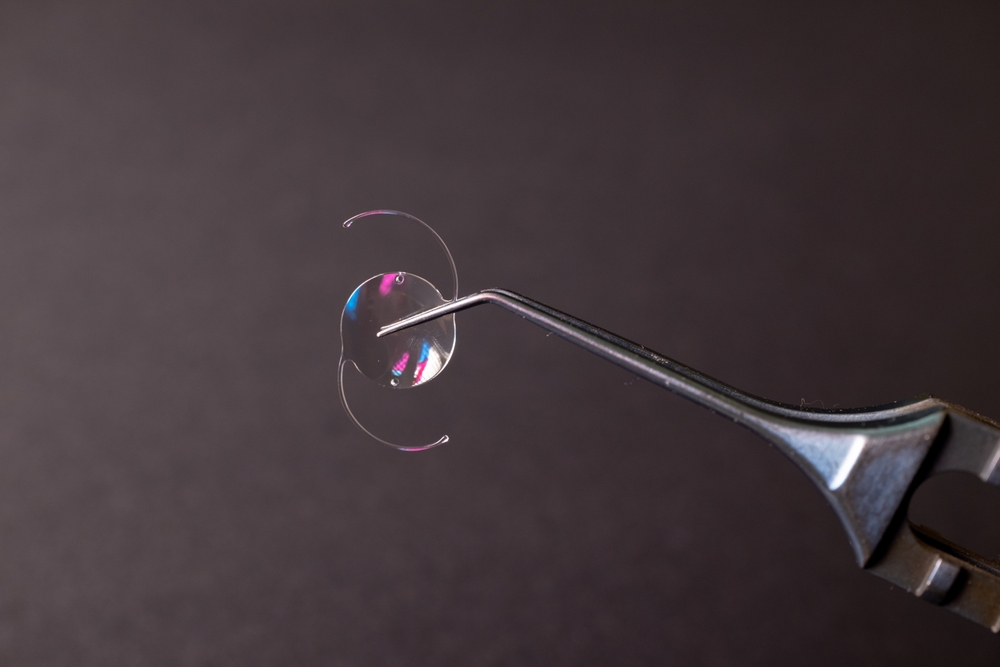
An intraocular lens, or IOL, is a small artificial lens placed inside your eye during cataract surgery to replace the natural lens once it has become cloudy.
Every modern IOL will clear away the cloudiness of a cataract. Where lenses differ is in the range of vision they provide. Some deliver crisp sight at a single distance, others correct astigmatism, and the most advanced options give you clear vision across near, intermediate, and far distances.
Monofocal and Toric Lenses
Monofocal lenses are the most widely used IOLs. Because they focus all light to a single point, they can produce exceptionally sharp vision at one chosen distance, usually distance vision.
Most patients who select a monofocal lens see well far away and then wear reading glasses for close-up tasks like books, phones, and menus. Insurance and Medicare typically cover this option when cataract surgery is medically necessary.
Toric lenses build on that foundation for patients with astigmatism. A cornea with astigmatism has a more oval than round shape, which blurs vision at every distance. Toric IOLs are designed to correct that irregular curvature during surgery, giving you clear distance vision without the glasses you would otherwise need.
The tradeoff with both monofocal and toric lenses is straightforward: they excel at one focal distance, so near and intermediate tasks usually still call for glasses.
Extended Depth of Focus and Multifocal
If reducing your dependence on glasses is a priority, presbyopia-correcting lenses are the category to consider.
Presbyopia is the age-related loss of near focusing ability that affects nearly everyone past 50, and these lenses are engineered to address it during cataract surgery.
Extended depth of focus lenses, often called EDOF lenses, stretch a single elongated focal zone so that distance and intermediate vision stay sharp. They work well for tasks like driving, seeing a dashboard, or working at a computer, and they tend to produce fewer nighttime glare and halo effects than some other premium options. Many EDOF patients still reach for reading glasses for the smallest print.

Multifocal and trifocal lenses go further by providing distinct focal points for near, intermediate, and distance vision within a single lens. This range does come with a possible adjustment period, and some patients notice glare or halos around lights at night, especially early on.
These lenses tend to suit active people who read, golf, play pickleball, travel, or spend hours online and want to spend more of the day glasses-free.
For patients with astigmatism who want this range, cataract surgeons can pair lens selection with a femtosecond laser during laser cataract surgery to treat the astigmatism precisely at the same time.
The Light Adjustable Lens
The Light Adjustable Lens, or LAL, represents one of the most significant recent advances in cataract care.
While traditional lenses lock in their power the moment they are implanted, meaning your surgeon predicts the ideal power before surgery and you live with the result, the LAL offers an opportunity to customize your vision after surgery.
The LAL is made from a special light-sensitive material. After your eye heals for a few weeks, your doctor uses carefully controlled ultraviolet light to reshape the lens while it sits in your eye, fine-tuning how it focuses. You experience your vision first, then adjust it, sometimes across several appointments, until it matches what you want. A final lock-in treatment makes the result permanent.
This lens can be a great option for patients who want a high degree of customization and for those who have had prior LASIK, PRK, or RK, where standard lens power calculations are harder to predict. The LAL does ask for a commitment. You need to attend the follow-up light treatments and wear protective UV glasses between visits, so it rewards patients who are willing to see the process through.
How to Find the Right Lens for You
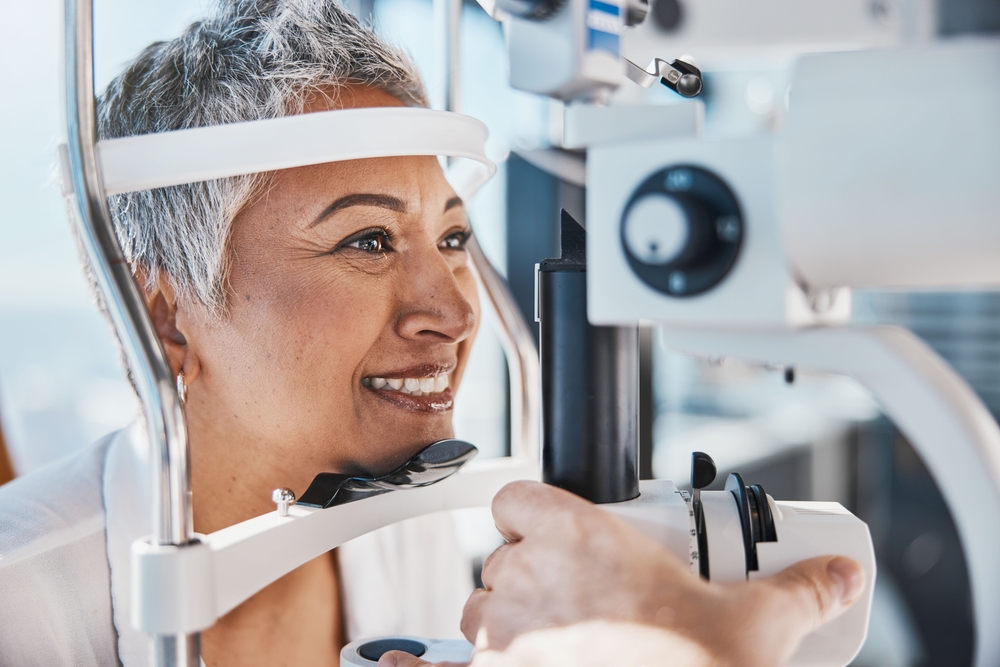
No single lens wins for everyone, which is why the most important part of the decision happens during your Lens Evaluation.
At Lalin Eye, Dr. Lalin asks about your career, your hobbies, your activity level, how much you drive at night, and how you want to see when the healing is done.
Budget and eye health also shape the conversation. Insurance generally covers cataract removal with a standard monofocal lens, while presbyopia correction, astigmatism correction, and other premium upgrades are usually elective and carry additional out-of-pocket costs. Your cataract surgery team will lay out what to expect and discuss the financing options available for patients who want a fuller range of vision.
The “best” IOL becomes the one that fits you specifically, not a name at the top of a generic list.
Wondering which lens implant is the best fit for your vision and lifestyle? Schedule an appointment at Lalin Eye in Morristown or Hackettstown, NJ.