
Can I Still Drive at Night With My Cataracts?
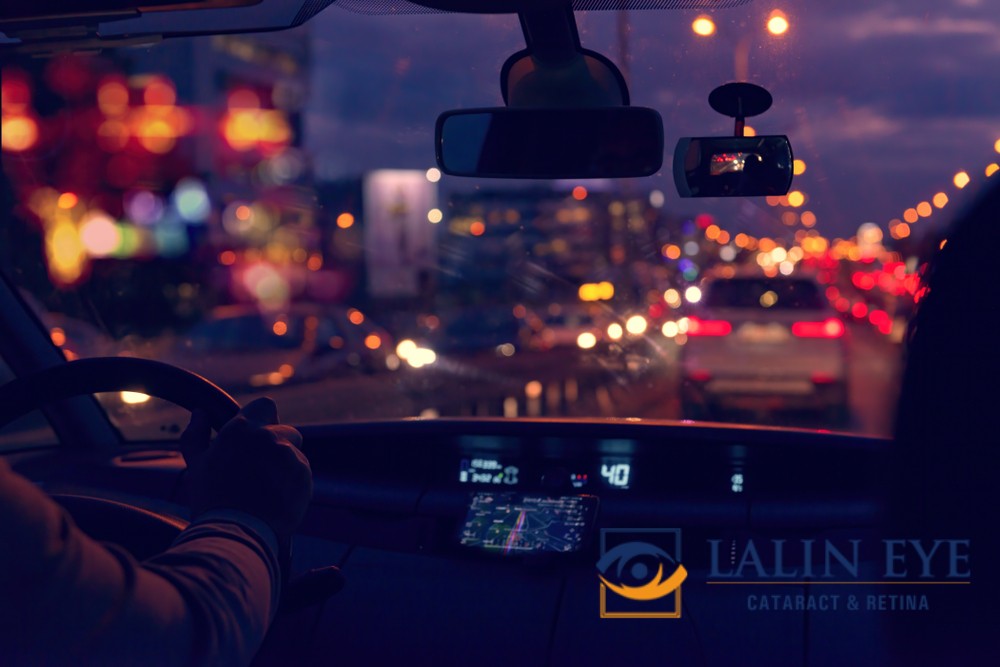
Many people with cataracts get along just fine in daylight, at least in the early stages. Nighttime is a different story. Low light puts extra demand on your eyes, and a clouded lens makes it that much harder to manage. At Lalin Eye, our leading cataract specialists work with patients every day who are asking the same question: is it still safe for me to drive after dark?
The answer depends on how far your cataracts have progressed and what your vision is doing behind the wheel. Keep reading to learn what your cataracts could be doing to your nighttime vision, and what you can do about it.
Why Cataracts Make Night Driving So Much Harder

The lens inside your eye is normally clear. Its job is to focus incoming light onto the retina at the back of your eye so you can see sharp, clear images. A cataract forms when that lens gradually becomes cloudy, usually as part of the natural aging process.
When light passes through a cloudy lens, it scatters rather than focusing cleanly. During the day, ambient light is plentiful, and your pupils are naturally smaller, which limits how much scattered light enters the eye.
At night, your pupils widen to let in as much light as possible. That wider opening also lets in more scattered light, which is exactly why cataracts tend to feel so much worse after dark. The result is a cluster of visual symptoms that make night driving genuinely difficult. Halos and starbursts around headlights and streetlamps are among the most common complaints.
Contrast sensitivity also drops, meaning it becomes harder to tell where the road ends and the shoulder begins, or to spot a dark-clothed pedestrian against an unlit background. Colors may look duller, depth perception can suffer, and the overall picture feels dim even when there is plenty of light around.
These changes do not happen overnight. Most people notice a slow, steady decline over months or years. That gradual shift is part of what makes it easy to underestimate how much vision has changed.
When Night Driving Becomes a Safety Risk
Mild cataracts often cause only minor visual changes that do not significantly affect your ability to drive safely after dark. As they progress, though, the visual interference can cross a line where getting behind the wheel at night puts you and others at risk.
A few signs that your nighttime driving has reached a concerning point:

- You hesitate or feel anxious before driving after dark in a way you did not before
- Oncoming headlights are blinding or take a long time to recover from
- You have misjudged distances, missed a turn, or had a close call at night
- Passengers or family members have expressed concern about your driving
- You find yourself gripping the wheel harder, slowing down significantly, or avoiding highways and unfamiliar roads once the sun goes down
No one likes to give up independence, and driving is closely tied to that. The goal is not to take away your keys before it is necessary. Scheduling a comprehensive eye exam is the best way to get an honest, objective picture of exactly where your vision stands and whether your cataracts have reached a stage that warrants surgical treatment.
Practical Steps While You Are Still Driving at Night
If your cataracts are in an earlier stage and your eye doctor has confirmed that nighttime driving is still within a safe range for you, there are some practical steps that can help.
Glasses with an anti-reflective coating reduce glare from oncoming headlights and streetlamps. If you wear prescription lenses, ask your optician about this coating specifically for driving at night. A clean windshield matters more than most people think. Dirt, film, and small chips scatter light in much the same way a cataract does, adding to the visual noise your eyes are already dealing with.
Reducing interior glare also helps. Dim your dashboard display to its lowest comfortable setting and avoid using your phone’s bright screen while the car is in motion. When possible, plan evening activities on well-lit routes you know well, and avoid peak glare hours when oncoming traffic is heaviest.
These adjustments buy time and make driving safer, but they do not address the underlying problem. Cataracts only progress. The visual interference that feels manageable today will become more significant over time.
How Cataract Surgery Restores Night Vision
Cataract surgery removes the clouded natural lens entirely and replaces it with a clear artificial lens called an intraocular lens implant, or IOL. Once the source of the light scattering is gone, most of the visual disturbances that come with cataracts disappear along with it.
Patients who struggled with halos and glare for years often describe the change as dramatic. Colors look more vivid. Contrast comes back. Driving at night feels manageable again rather than stressful.
At Lalin Eye, laser cataract surgery uses the Alcon LenSx femtosecond laser, which allows Dr. Lalin to perform the procedure with a level of precision and customization that was not possible with older manual techniques. The laser creates a detailed three-dimensional map of your eye before surgery, so every step of the procedure is tailored specifically to you.
The lens implant options available at Lalin Eye go well beyond simply replacing what was there before. During your evaluation, your eye doctor will review your lifestyle and visual goals to help identify which option makes the most sense for you.
How to Know If You Are Ready for Surgery

One of the most common misconceptions about cataract surgery is that you have to wait until your cataracts are severe before doing anything about them. That is no longer the standard of care. Today, surgery is recommended when cataracts are affecting your quality of life, whether that means struggling to read, finding bright indoor light uncomfortable, or no longer feeling confident behind the wheel at night.
If nighttime driving has become a source of anxiety or you have started avoiding it altogether, that is a meaningful quality-of-life change, and it is worth having a conversation with a specialist. A cataract evaluation at Lalin Eye involves a thorough examination of your eyes, a review of your visual symptoms, and a detailed discussion of your options.
Worried about your vision at night? Schedule an appointment at Lalin Eye in Morristown or Hackettstown, NJ.